How to ship a database every day
Every day, turbopuffer customers ask for things: new query plans, new APIs, new index structures. In response, we deploy dozens of database upgrades per day across our clusters, many of them the same day we open the PR. Shipping fast is how we make every customer feel like they're our only customer.
We don't want to limit where you can run turbopuffer, so we support many regions across three deployment models: public SaaS, single-tenant SaaS, and BYOC. In total, we operate 100+ clusters, twice as many as we had 6 months ago, and growing as we add more public regions and many more BYOC deployments.
╔═ tpuf account ═══════════╗
║ ┏ public ━━━━━━━━━━━━━━┓ ║
║ ┃ AWS | GCP            ┃ ║
║ ┃ shared resources     ┃ ║
║ ┃ tpuf operator access ┃ ║
║ ┗━━━━━━━━━━━━━━━━━━━━━━┛ ║
║ ┏ single-tenant ━━━━━━━┓ ║
║ ┃ AWS | GCP            ┃ ║
║ ┃ dedicated resources  ┃ ║
║ ┃ tpuf operator access ┃ ║
║ ┗━━━━━━━━━━━━━━━━━━━━━━┛ ║
╚══════════════════════════╝

╔═ customer account ═══════╗
║ ┏ BYOC ━━━━━━━━━━━━━━━━┓ ║░
║ ┃ AWS|GCP|Azure        ┃ ║░
║ ┃ customer's resources ┃ ║░
║ ┃ no tpuf operator     ┃ ║░
║ ┃ access               ┃ ║░
║ ┗━━━━━━━━━━━━━━━━━━━━━━┛ ║░
╚══════════════════════════╝░
 ░░░░░░░░░░░░░░░░░░░░░░░░░░░░
The problem with BYOC
BYOC clusters live inside our customers' cloud accounts, to which we hold no
credentials by default. We can't just SSH or kubectl in. Some BYOC vendors
solve this by asking the customer to carve out a dedicated cloud account and
grant the vendor standing admin credentials inside it. That keeps the rest of
the customer's cloud account isolated, but every dedicated account creates
security monitoring + compliance + billing overhead that we generally prefer to
avoid.
We don't want different control planes for BYOC and SaaS, so we have to design for the lowest common denominator. We must be able to operate every cluster without reaching in.
How do you operate a database cluster you can't touch?
The only way this works is if every operation we need to perform on a cluster can run without us reaching in. The cluster must be able to independently drive its operations to a terminal state, even if it loses its connection to the central control plane.
The solution to this is standard Kubernetes stuff. On every cluster, we run a
local cluster agent that implements a simple state machine. A single Kubernetes
CRD called TurbopufferOperation
expresses every operation kind, from upgrade to tidy. A Kubernetes
controller drives each custom resource (CR) from state to state via a
reconciliation loop until it reaches a terminal state. Operations advance on
their own by default, but BYOC customers can gate operations on
approval
or
maintenance windows.
These are baked into the CRD as waiting states that advance when approvals are
given or the window opens.
╔═ operation lifecycle ════╗
║ ┏━━━━━━━━━━━━━━━━━━━━━━┓ ║░
║ ┃  REQUIRES_APPROVAL   ┃ ║░
║ ┗━━━━━━━━━━━┯━━━━━━━━━━┛ ║░
║             ▼ approve    ║░
║ ┏━━━━━━━━━━━━━━━━━━━━━━┓ ║░
║ ┃       PENDING        ┃ ║░
║ ┗━━━━━━━━━━━┯━━━━━━━━━━┛ ║░
║             ▼ start()    ║░
║ ┏━━━━━━━━━━━━━━━━━━━━━━┓ ║░
║ ┃       RUNNING        ┃ ║░
║ ┗━━━━┯━━━━━━━━━━━┯━━━━━┛ ║░
║      ▼ poll()    ▼       ║░
║ ┏━━━━━━━━━┓ ┏━━━━━━━━━┓  ║░
║ ┃ SUCCESS ┃ ┃ FAILURE ┃  ║░
║ ┗━━━━━━━━━┛ ┗━━━━━━━━━┛  ║░
╚══════════════════════════╝░
 ░░░░░░░░░░░░░░░░░░░░░░░░░░░░
The key is to define states that are generic enough to model every operation
kind, both existing and future, but finite enough that the reconciler can always
drive them toward a terminal state. We never need to reach in to do work, and
the state lives as a durable object in the cluster's own
etcd. If the agent crashes
or loses its connection to the control plane, it can still drive that work to
completion.
The local, durable state machine means we don't have to reach into a cluster to drive its work, but how does a cluster get its work?
You use Terraform, right?
The default here would be to reach for infrastructure-as-code (IaC) tools like Terraform and Helm. These tools are great for provisioning infrastructure. We use them for that! But they're the wrong control plane for operating a fleet of databases.
First, we do not have a dedicated DevOps function at turbopuffer. We ask our database engineers to deploy their code to the infra. Most of them haven't used IaC tools much in the past, so it doesn't make sense to put those tools in their critical path.
Second, Terraform's default model would require us to run terraform apply from
our own infrastructure with the customer's infra as the target, which we can't
do for BYOC. A GitOps flow for Terraform could solve this by having the customer
automatically trigger terraform apply from within their cloud account whenever
a Git repo is updated. For database upgrades, this could theoretically work:
just bump the Docker image in the Terraform config. But who owns the repo? If
it's ours, BYOC customers who want an approval gate have no control over merges.
If it's theirs, we're back to needing write access into their systems or waiting
on humans to merge the PR.
Either way, many of our operations have a less declarative shape. Things like one-off namespace reindexing, compacting a WAL, or garbage collecting the LSM are jobs to be done, not states to be arrived at. Every ad hoc operation would need to be a git commit with a new manifest to create the job, then a commit to garbage collect the completed jobs. Terraform files make great declarative manifests, but terrible job queues.
How the agent fetches work (and how we keep track of it)
We can't reach into a cluster, and we won't use GitOps, but the cluster still needs to be able to pull its work from the control plane and push its status back out. The system must be fully tolerant of a lost connection between cluster and control plane; a control plane outage should not take down an otherwise healthy cluster. In the event of a lost connection, the cluster should be able to pick up its new operations once it reconnects, while the control plane should be able to catch up on the state of the cluster.
To accomplish these aims, we built a custom central control plane consisting of an API server backed by a PlanetScale MySQL database.
Each cluster agent is given a cluster-specific API key. To fetch its operations,
the agent regularly polls the API server via an authenticated GET request, to
which the API server responds with that cluster's pending operations. Once the
agent gets its operations, it stores them as custom resources and starts running
them through its reconciliation loop. This is idempotent: each operation's CR is
named with that operation's ID, so if for some reason a later GET returns the
same operation again, the agent will just find the existing CR and resume from
the state stored in etcd instead of creating a duplicate.
As the operations advance, the cluster agent will periodically POST its
buffered status transitions back to the API server, which mirrors them into a
status_transitions table in MySQL as an append-only log.
     tpuf engineers
            │
            ▼
╔═ control plane ════════════╗
║ ┏━━━━━━━━━━━━━━━━━━━━━━━━┓ ║░
║ ┃           UI           ┃ ║░
║ ┗━━━━━━━━━━━┯━━━━━━━━━━━━┛ ║░
║             ▼              ║░
║ ┏━━━━━━━━━━━━━━━━━━━━━━━━┓ ║░
║ ┃       API server       ┃ ║░
║ ┗━━━━━━━━━━━┯━━━━━━━━━━━━┛ ║░
║             ▼              ║░
║ ┏━━━━━━━━━━━━━━━━━━━━━━━━┓ ║░
║ ┃         MySQL          ┃ ║░
║ ┃     (PlanetScale)      ┃ ║░
║ ┗━━━━━━━━━━━━━━━━━━━━━━━━┛ ║░
╚════════════════════════════╝░
 ░░░░░▲░░░░░░░░░░░▲░░░░░░░░░░░░
      │GET work   │POST state
      │           │
╔═ cluster ══════════════════╗
║ ┏━ cluster agent ━━━━━━━━┓ ║░
║ ┃┌──────────────────────┐┃ ║░
║ ┃│    k8s controller    │┃ ║░
║ ┃│  (sync + reconciler) │┃ ║░
║ ┃└───────────┬──────────┘┃ ║░
║ ┃            ▼           ┃ ║░
║ ┃┌──────────────────────┐┃ ║░
║ ┃│ TurbopufferOperation │┃ ║░
║ ┃│          CRs         │┃ ║░
║ ┃└──────────────────────┘┃ ║░
║ ┗━━━━━━━━━━━━━━━━━━━━━━━━┛ ║░
╚════════════════════════════╝░
 ░░░░░░░░░░░░░░░░░░░░░░░░░░░░░░
If the agent's POST fails to get a response, the agent puts the transitions
back into its buffer and tries again. The POST may have landed even if the
response didn't come back, so the same transition could show up twice in the
log. That doesn't matter: an operation's current state is just its latest
transition.
This is how we keep the central control plane in sync with each cluster even in the event of temporary connection loss. The database maintains the source of truth for the desired operations we want to run on every cluster, and holds a mirror of the status of those operations so we can rebuild a cluster's state from afar.
But a database is a dangerous interface. We said we didn't want to ship code
with YAML — it would be insane to replace that with INSERT INTO SQL
statements.
An interface we actually like using
We deploy every day, multiple times per day, and debug and maintain the clusters in between deploys. If you're a turbopuffer database engineer, you want the control plane to be as reliable and easy to use as your favorite code editor.
The control plane has a custom Remix/React dashboard that fronts the API server. The UX is inspired by Linear: everything has a hotkey, so you can operate it entirely from the keyboard. The information hierarchy is structured, and the selection state is clear, so you know exactly which clusters you're working on.
Upgrades are the most common operation, and the UI reflects that. We can quickly see each cluster's deployed commit SHA and how far it has drifted from the latest passing SHA, with metadata pulled from GitHub (commit message, PR number, commit date) so we don't have to decipher the SHA. Upgrades are typically done in groups, so we can select multiple clusters across all deployment models, choose a target commit SHA, and upgrade all of them from the keyboard. We can similarly kick off all other operations from this UI.
We don't expect our engineers to be in the dashboard all the time, so we stream status transitions for each operation into a dedicated Slack thread. If an operation fails, it fails loudly into the channel for people to react to and fix. This gets our attention without us having to babysit.
When an approval is needed for operations on a BYOC cluster, the same Slack integration automatically notifies the customer through their dedicated Slack support channel so they can approve.
The control plane also provides a convenient jumping-off point for all the debugging and monitoring interfaces we use. If we want to watch an operation closely, we can jump from the control plane directly into Datadog logs, traces, or metrics scoped to its cluster(s). When a customer reports high latency, we can quickly pull up the memory/CPU profile in Polar Signals for their query pods. When a customer wants a limit bumped for a namespace, we can inspect the namespace and update the config right there (really!). When all the tools you need are right at hand, you feel more connected to your infra, and on-call sucks a lot less.
This dashboard is not just a vibe-coded sidecar to the control plane. We treat it as first-class software and invest engineering effort into it, so the complexity of operating the clusters stays mostly hidden behind a simple, fast, keyboard-driven interface.
Fleet operations
While the control plane has scaled very well, we started to feel the toil of fleet-wide upgrades: manually selecting clusters and a target SHA, kicking off the upgrade, monitoring it, and making sure things looked ok before proceeding to the rest. The larger our fleet got, the more painful it became to sequence and babysit a rollout that could last hours.
Now, any operation can be submitted as a fleet operation, and the control plane's fleet controller will roll it out across a sequence of waves containing one or more clusters. Between waves, a gate checks that every cluster in the wave upgraded successfully and that our monitors are quiet. If a monitor fires or any cluster fails, the fleet controller pauses the rollout and notifies us in Slack, limiting the fallout from a bad deploy.
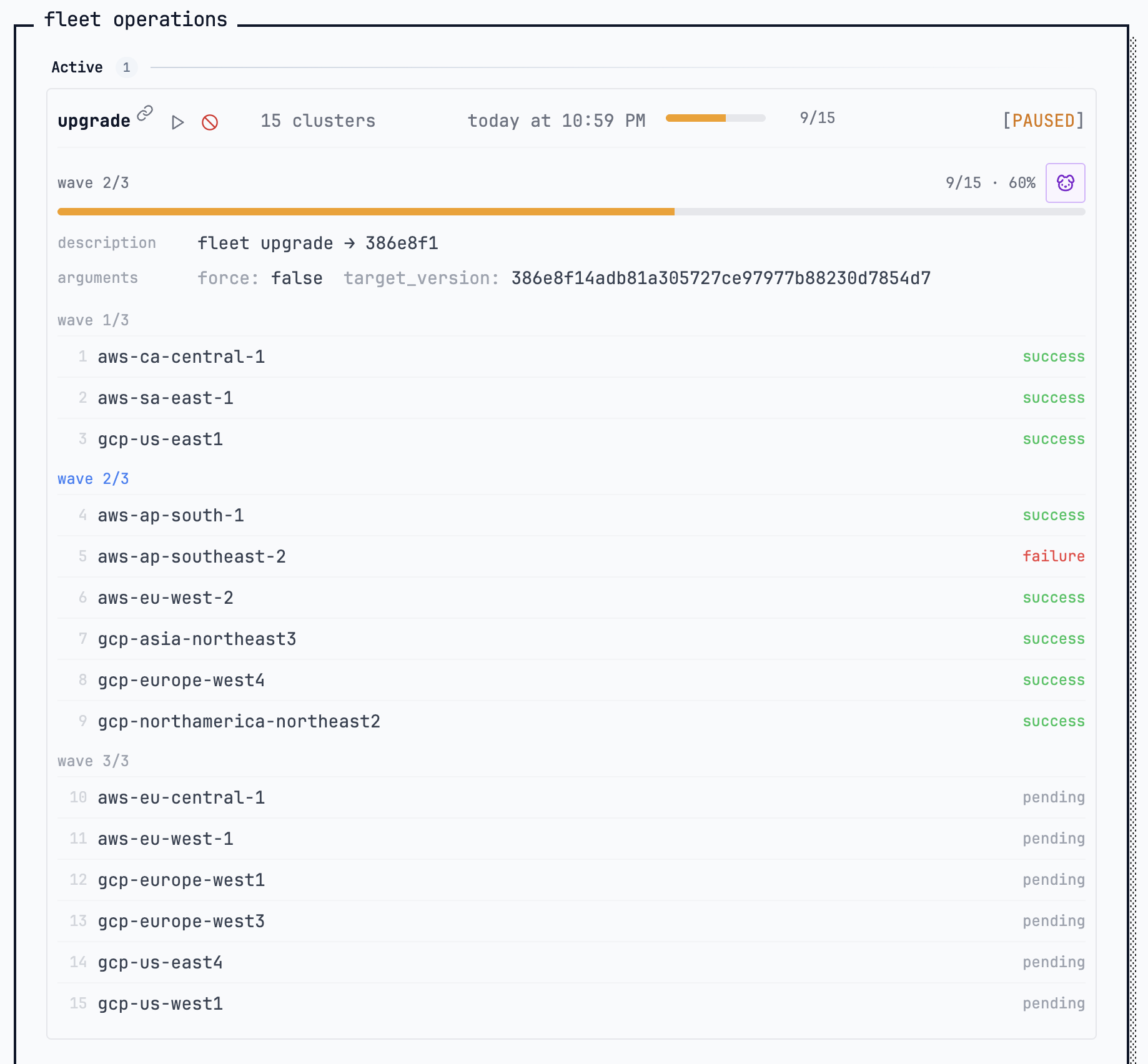
Importantly, nothing changes for the cluster agent. It has no concept of a fleet or fleet operation. It still polls the API server for its pending operations, and its status transitions are still mirrored back into the same MySQL table. Every operation is still the same CRD driven by the same local state machine. Orchestrating 100s of them is effectively just a loop over existing primitives.
Simplicity scales
turbopuffer's architecture is easy to reason about and easy to be on call for. It would be a shame if it wasn't also easy to deploy to. The design decisions we make in the control plane all funnel toward simplicity: a single control plane for all deployment models, a single CRD for every operation, a single UI to manage the entire fleet.
This simplicity has allowed us to scale the control plane from managing just a few public regions to 100+ clusters across dozens of regions and multiple deployment models. We believe its simplicity will allow us to maintain our shipping speed even as we scale to 1000s.
turbopuffer
turbopuffer is a fast search engine that hosts 1T+ documents, handles 10M+ writes/s, and serves 100k+ queries/s. We are ready for far more. We hope you'll trust us with your queries.
Get started